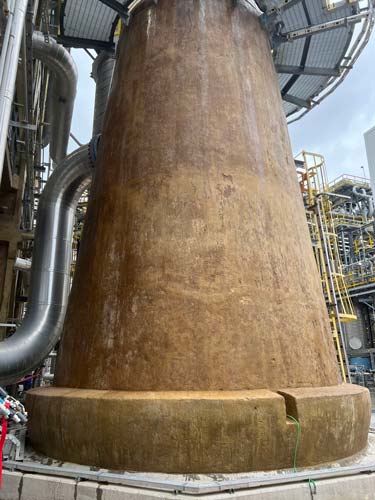
New Advances in Cementitious Fireproofing: Learn More at AMPP 2025
Join Art MacKinnon, an leading expert in industrial fireproofing, at the AMPP Annual Confe...
Read more

In many industrial settings, extreme heat and chemical exposure are everyday challenges. Selecting the right concrete for these environments is essential to ensure infrastructure durability and safety. Heat and chemical resistant concrete offers a solution that handles both high temperatures and aggressive chemicals, making it suitable for a wide range of industries, including petrochemical, mining, food processing, and oil and gas.
In this article, we explore the key properties of heat resistant cement / concrete and chemical resistant concrete, their applications, and how they perform in demanding environments.
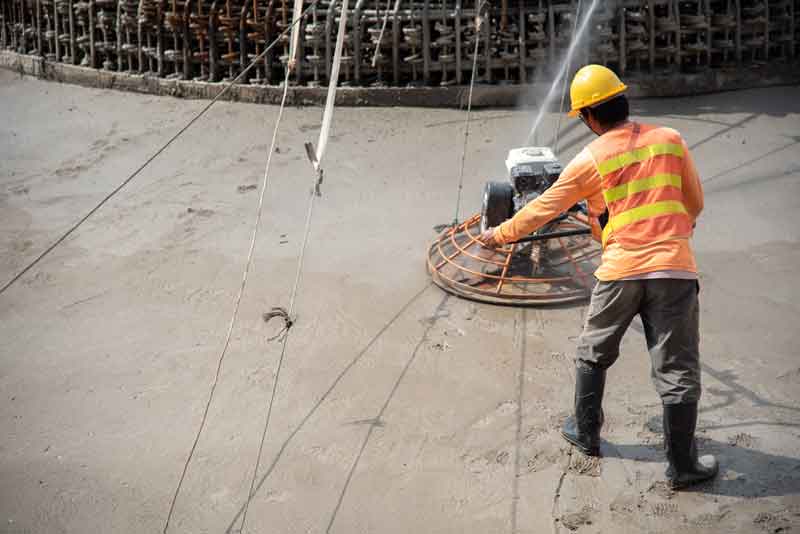
Unlike regular concrete, which can crack or degrade when exposed to extreme heat, heat resistant concrete is designed to withstand the stress caused by high temperatures. It resists thermal expansion and contraction, ensuring that the material doesn’t crack or lose its integrity even under extreme heat.
Heat proof cement-based concrete is essential in industries that rely on processes that generate high temperatures such as furnaces, kilns, and power plants, where temperatures can reach extreme levels. Its durability under high heat ensures long-lasting performance for these critical applications.
Chemical resistant concrete is engineered to endure exposure to aggressive chemicals without losing its strength or integrity. It resists degradation caused by acids, oils, solvents, and other chemicals that would typically break down standard concrete.
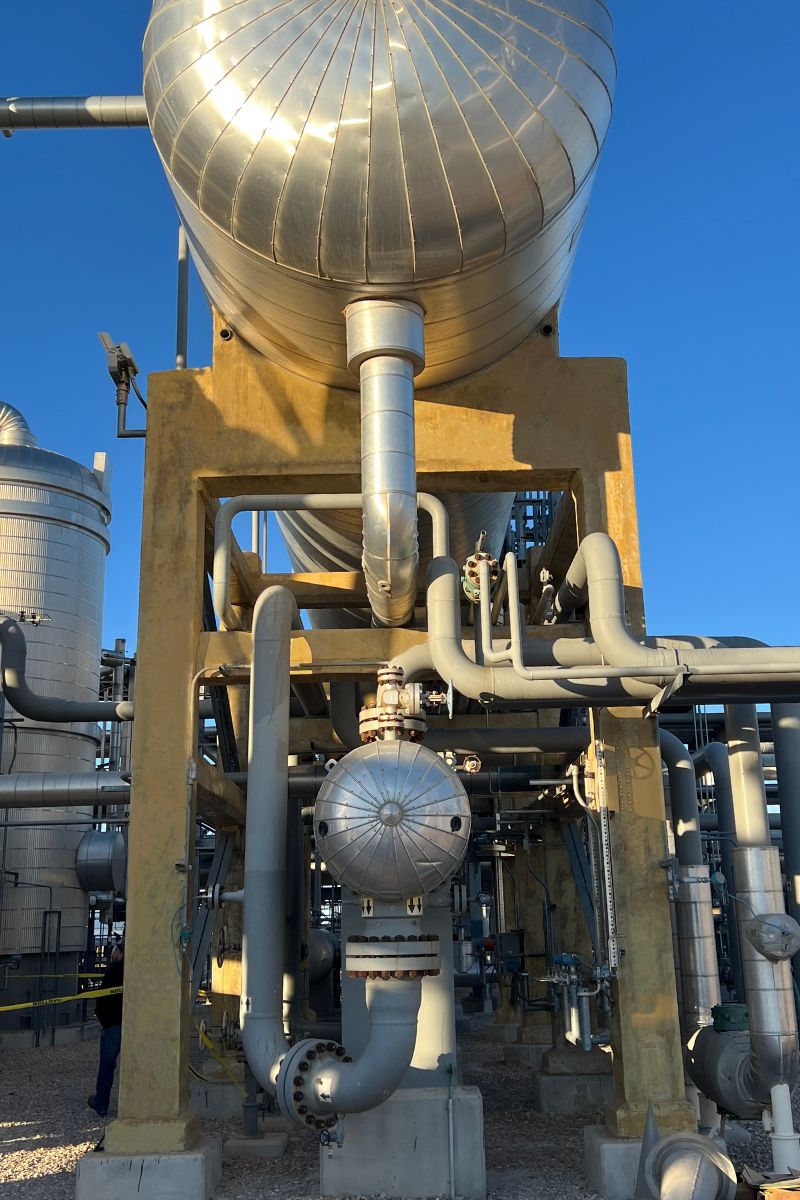
This type of concrete is frequently used in industries like petrochemical, fertilizer production, and food processing, where constant chemical exposure is common. The ability of chemical resistant concrete to withstand chemical attacks without deteriorating is essential in environments such as chemical processing plants, secondary containment systems, and wastewater treatment facilities.
Both high heat resistant concrete and chemical resistant concrete are valuable for industries where high temperatures and chemical exposure are common. Some key applications include:
When selecting concrete for your industrial project, it’s crucial to choose a material that can withstand both high temperatures and chemical exposure.
Geopolymer Solutions’ Cold Fusion Concrete (CFC) is a geopolymer cement-based, ultra-high performance and lightweight material engineered to provide both heat and chemical resistance. CFC—which does not contain portland cement—offers a single, durable solution for the most demanding environments.
Learn About Cold Fusion Concrete.
Portland Cement vs. Geopolymer Concrete—What’s the Difference?
Office Address: 11200 Cox Road Suite B, Conroe, Texas 77385, USA
Email Address: info@geopolymertech.com
Phone Number: 281-419-1866
Geopolymer Solutions
Follow us on LinkedIn for news & industry insights.