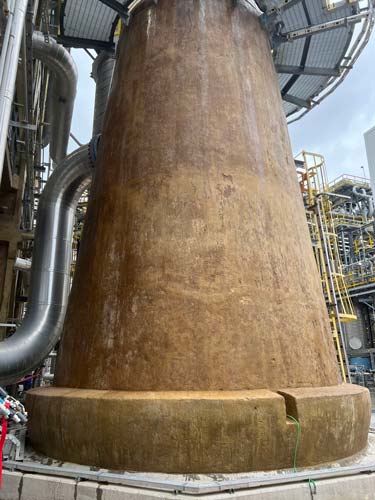
New Advances in Cementitious Fireproofing: Learn More at AMPP 2025
Join Art MacKinnon, an leading expert in industrial fireproofing, at the AMPP Annual Confe...
Read more

Table of Contents
There are no headings in this document.
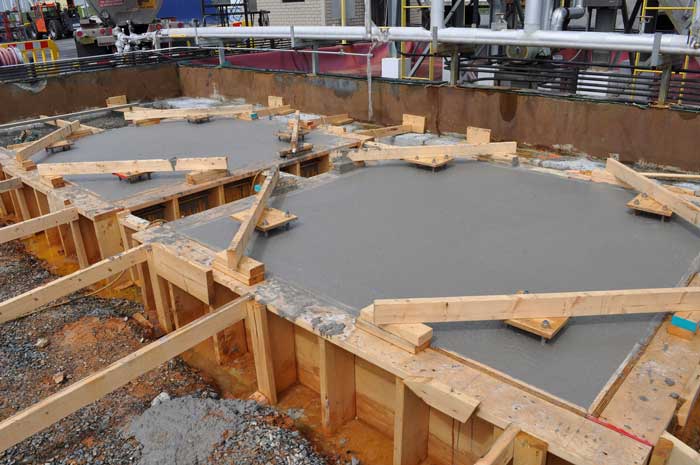
Concrete is the second most-used material on Earth after water. It plays a crucial role in buildings, dams, roads, and many other construction projects. However, traditional portland cement concrete contributes significantly to global greenhouse gas emissions, accounting for approximately 5-10% of all emissions worldwide.
Portland cement production involves heating limestone and other minerals at temperatures exceeding 2,300° Fahrenheit. This results in the release of one ton of carbon dioxide per ton of cement produced. This energy-intensive process relies on high-carbon fuels like coal or natural gas. It also creates “clinker,” a main ingredient in portland cement, which adds further to its carbon footprint.
As demand for eco-friendly and sustainable construction grows, many are asking: Is concrete environmentally friendly?
While traditional concrete has a significant environmental impact, alternatives like green concrete pave the way for more sustainable construction practices.
Greenconcrete is an eco-friendly alternative to traditional portland cement. It’s made from recycled materials like fly ash and blast-furnace slag, with a carbon footprint about 90% lower than regular cement.
By reusing by-products from coal and steel production, this green cement reduces waste, saves energy, and protects natural resources—making it perfect for sustainable construction.
Green concrete’s unique chemical structure achieves strength without extreme heat, contributing to both energy savings and durability. Studies show that green concrete can last over ten times longer than traditional concrete.
Comparing traditional concrete with green concrete reveals a stark contrast in environmental impact. While portland cement has a significant carbon footprint, green concrete offers a sustainable alternative.
For more information on green concrete applications, visit Geopolymer Solutions’ ultra-high performance Cold Fusion Concrete (CFC) product page.
Our eco-friendly concrete provides both environmental and economic benefits:
Learn more about Cold Fusion Concrete (CFC) and its unique capabilities.
The durability, chemical resistance, and flexibility of today’s green concrete makes it ideal for challenging environments across numerous industries. From new construction to critical repairs, this sustainable material is designed for long-lasting performance in tough conditions.
Green concrete is ideal for a wide range of applications. Discover how Cold Fusion Concrete (CFC) can meet your project’s needs.
Green concrete undergoes rigorous testing to ensure it meets the highest performance standards for demanding environments. Compliant with ASTM C1157, this ultra-high-performance concrete is tested for resistance to chemicals, extreme temperatures, and physical stresses. These tests confirm its suitability for industrial applications where durability is critical:
This testing guarantees its reliability in demanding applications. Learn more about the performance of ultra-high performance Cold Fusion Concrete (CFC).Geopolymer concrete’s adaptability makes it a top choice for industries that require sustainable, durable materials.
Green concrete redefines sustainable cement production, creating eco-friendly options that meet high-quality standards.
It uses globally available minerals and batches easily at traditional ready-mixed facilities. In regions without industrial by-products like fly ash, producers can substitute naturally occurring materials. This approach offers two flexible options for sustainable construction needs worldwide:
While green concrete has many advantages, there are some unique considerations. For instance, sourcing industrial by-products like fly ash can be challenging in certain regions. Also, while it can be mixed like traditional concrete, minor adjustments to curing times or handling methods may be required.
Researchers continuously work to improve Geopolymer concrete, from expanding the range of recyclable materials to reducing production costs. As the construction industry moves toward carbon-neutral and carbon-negative practices, green concrete could play a key role in transforming sustainable building materials.
As the demand for carbon-neutral concrete and sustainable cement alternatives grows, green concrete offers a strong, eco-friendly solution. It is highly durable, requires little maintenance, and lasts over ten times longer than traditional concrete. By reducing waste and reusing industrial by-products, green concrete supports a carbon-negative path to sustainable construction.
Want to learn more about eco-friendly cement? Contact us, or explore additional resources on sustainable construction.
Office Address: 11200 Cox Road Suite B, Conroe, Texas 77385, USA
Email Address: info@geopolymertech.com
Phone Number: 281-419-1866
Geopolymer Solutions
Follow us on LinkedIn for news & industry insights.